

Busan tour Small / Large private Group for CRUISE PASSENGERS
Viator Partner
Booking is handled by our trusted partner. You'll be redirected to complete your purchase.
Overview
( Culture + History + Nature view + Local food experience)
"A" course (South- East)
Haedongyonggungsa Temple - Dalmaji road ( photo zone ) - Haeundae beach with Dongback island (APEC) - Lunch - Gwanganli bridge - UN memorial park - Busan tower - Nampodong - Gukje market - Jacalchi fish market - Return to Cruise port
"B" course (South-North)
Beomeosa Temple - Haedongyonggungsa Temple - Dalmaji road ( photo zone ) - Haeundae beach with Dongback island (APEC)- Lunch - Gwanganli bridge - Nampodong - Gukje market - Jacalchi fish market - Return to Cruise port
"C" course ( South-West)
Haedongyonggungsa Temple - Dalmaji road ( photo zone ) - Haeundae beach with Dongback island (APEC) - Lunch - Gwanganli bridge - Songdo beach -Gamcheon culture Village's - Nampodong - Gukje market - Jacalchi fish market - Return to Cruise port
All itinerary, customized and flexible depends on following the traveler's schedule.
What's Included
- Private transportation
- Guide + driver or driving guide
- Free pickup and drop-off
- Gas + toll + parking fees
What's Not Included
- Meals
- Entrance fees
Additional Information
Ticket Information
- Mobile or paper ticket accepted
- One per booking
Tour Options
Large private Group (8-15pax)
Pickup included
Small private Group (1-7pax)
Pickup included
Cancellation Policy
For a full refund, cancel at least 24 hours before the scheduled departure time.
Itinerary
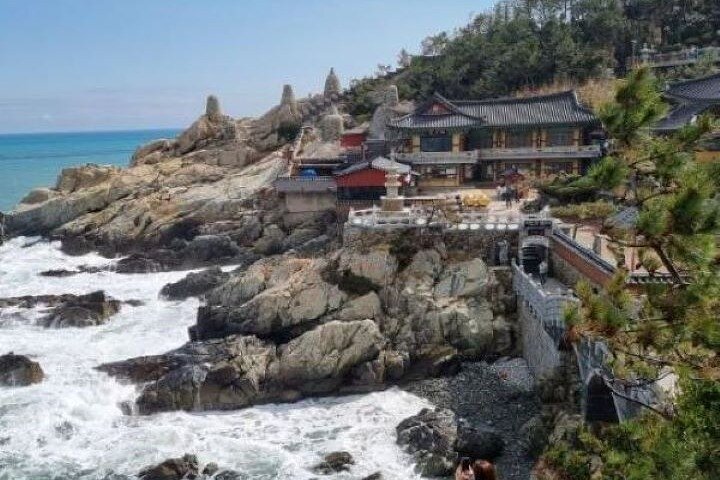
As one of the only oceanside Buddhist temples in all of South Korea, Haedong Yonggungsa is also one of the country’s most unique places of worship. With more than 600 years of history, the temple is known for its unusual location and mystical occurrences.
Called Busan’s Montmartre, Dalmaji-gil Road is famous for its views of the blue ocean, white sandy beach, Camellia forest, and pine tree forest, creating one of Busan’s eight scenic sites.
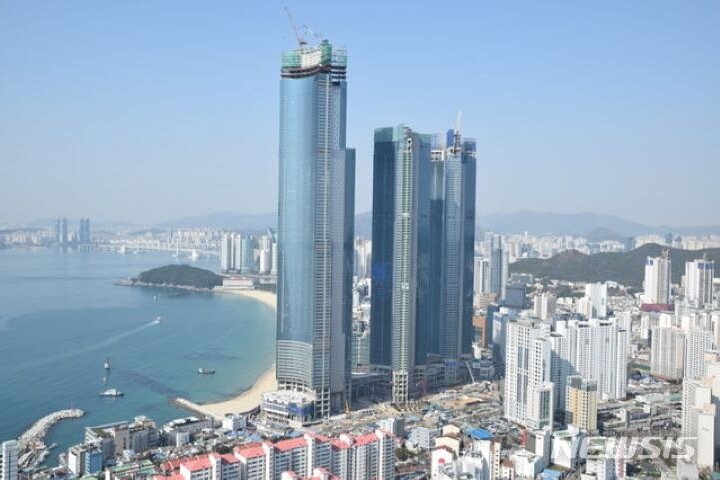
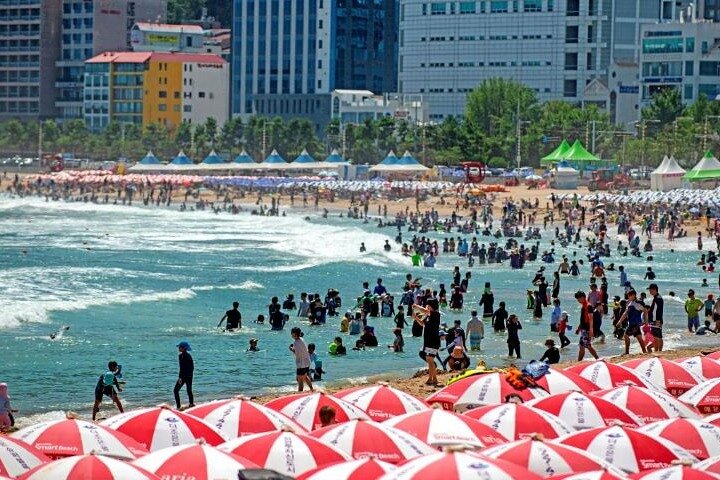
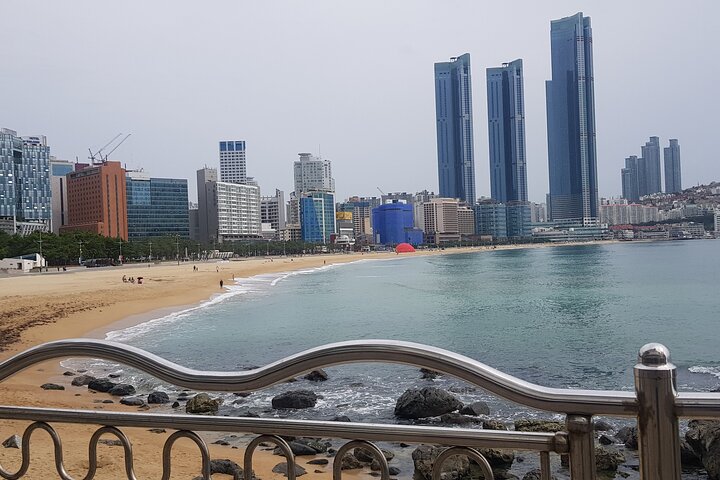
Haeundae Beach is an urban beach in Busan, South Korea. Often dubbed one of the country's most famous and popular beaches, it is located in the eponymous Haeundae District
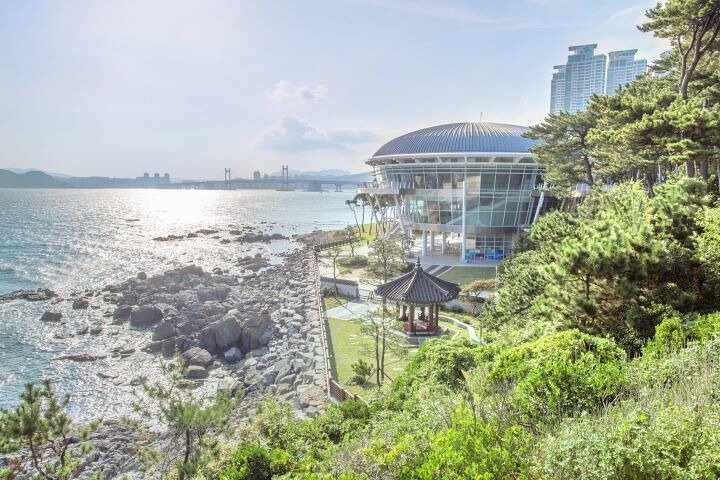
Dongbaekseom Island is an island located in Busan, near the famous Haeundae Beach. The island honors Scholar Choi Chi-won. You can visit this island through a long walking path. You will pass by different points of attraction such as the mermaid statue (it represents the legendary heart breaking love story of the princess of Topaz from the Naranda country beyond the Sea. In this country lived a mermaid who was married to the King of Mungungnara. She shed many tears longing for her homeland and reflected on the topaz bead given by her grandmother-in-law), the Nurimaru APEC House, the Carved stone.
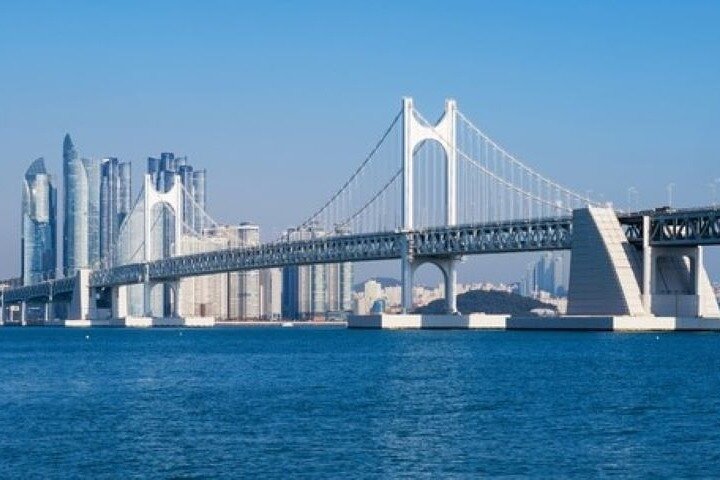
The Gwangandaegyo or Diamond Bridge is a suspension bridge located in Busan, South Korea. It connects Haeundae-gu to Suyeong-gu. The road surface is about 6,500 meters long, with the bridge as a whole spanning 7,420 meters. It is the second longest bridge in the country after the Incheon Bridge. ( nature view seaside with marine city town )
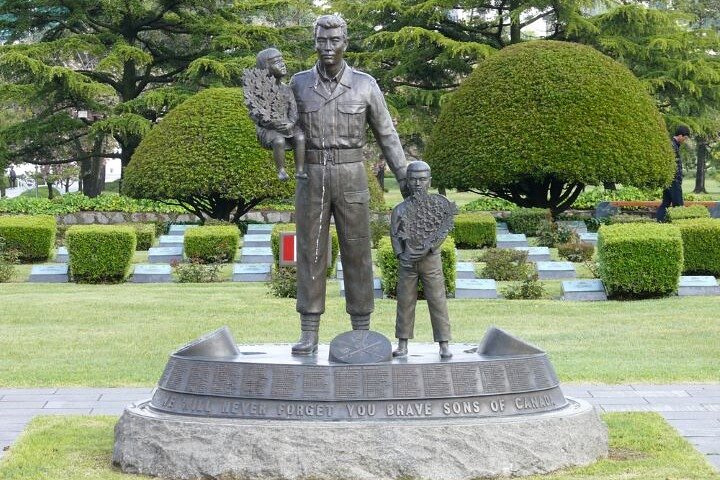
The UN Memorial Cemetery in Korea honors UN soldiers from 16 countries and UN aids from five countries that were killed in battle during the Korean War from 1950-1953. It is the only memorial cemetery in the world dedicated to UN soldiers. While the cemetery originally held up to 11,000 graves, most of the fallen soldiers were repatriated at the request of their families, with only 2,300 graves remaining. The serene park spreads across a grassy plain area of 135,000 square meters. Some notable sites and memorials include: Memorial Service Hall, Memorabilia Hall, two Turkish Monuments, Greek Monument, Australian Monument, British Commonwealth Monument and two ponds.
Opened in 1913, Songdo Beach is the first beach in Korea. After its golden period in the 1960s and 1970s, the beach became deserted. Those who wished to bring it back to its former beauty joined forces to repair the abandoned beach, making it even more breathtaking than it was in its heyday. With its spotless sandy beach, clear water, cloud trails, and an overwater cable car, Songdo Beach is once again a popular tourist destination receiving over five million visitors per year.
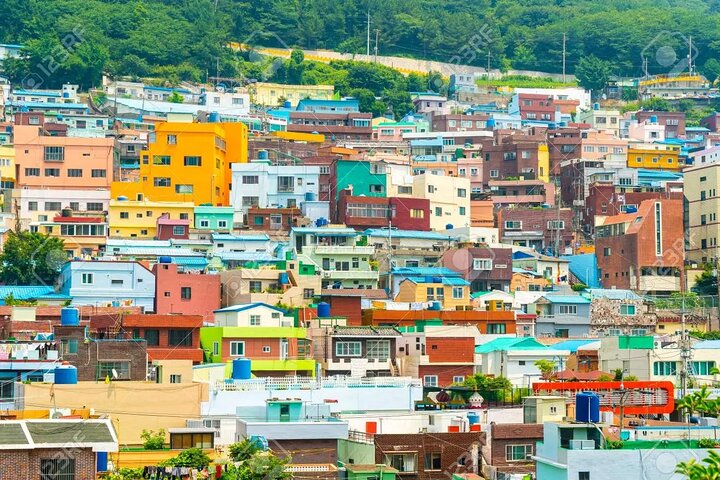
Gamcheon Culture Villiage is formed by houses built in staircase-fashion on the foothills of a coastal mountain, earning this village the nickname "Machu Picchu of Busan." Many alleys that cut through this community are vibrantly decorated with murals and sculptures created by the residents.
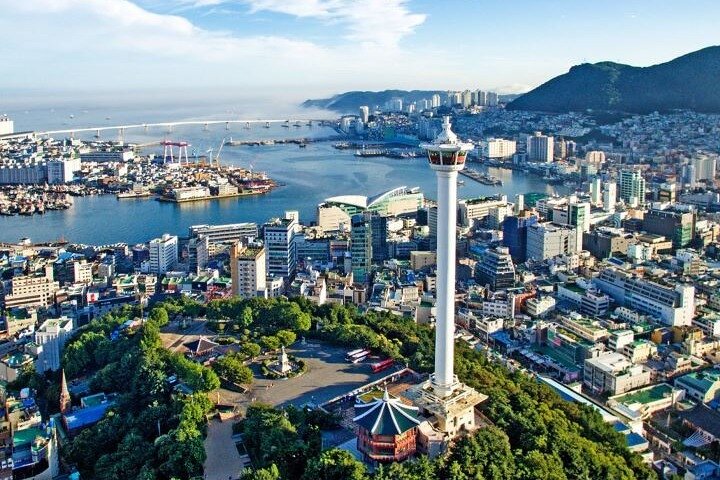
Busan Tower is a symbol of Busan that stands proudly at 69 meters above sea level at a height of 120 meters. The top of the tower is modeled after the baldaquin of Dabotap Pagoda in Bulguksa Temple, Gyeongju. Loved by Busan citizens and tourists alike, the tower offers a stunning night view and plenty to see, such as the Statue of the Great Admiral Yi Sun-sin, the Bell of the Citizens, a flower clock and a bust of the Busan-based independent activist, Baeksan An Hee-je.
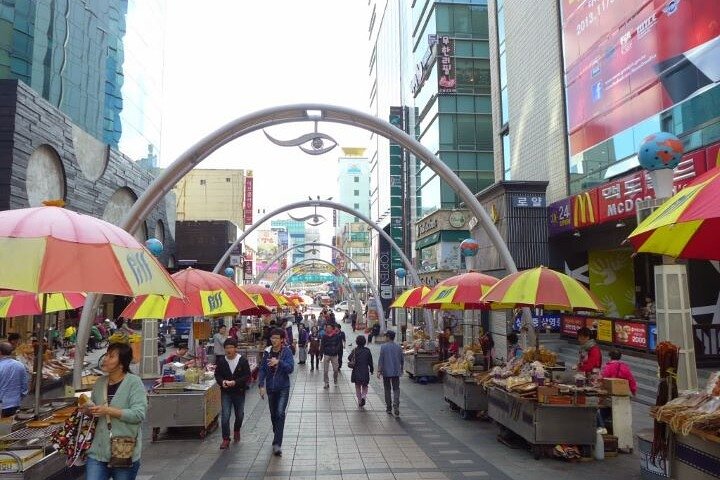
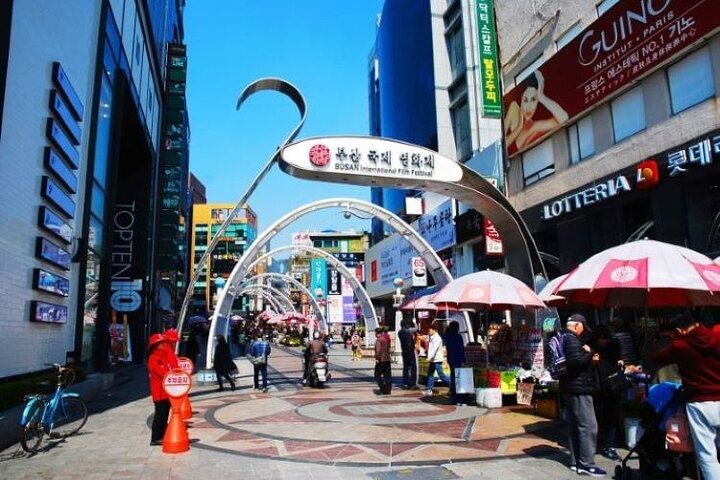
Nampodong, which is the old downtown area of Busan, literally has it all! It has all the different kinds of brand shops as well as affordable local stores. Between the streets, there are street food alleys
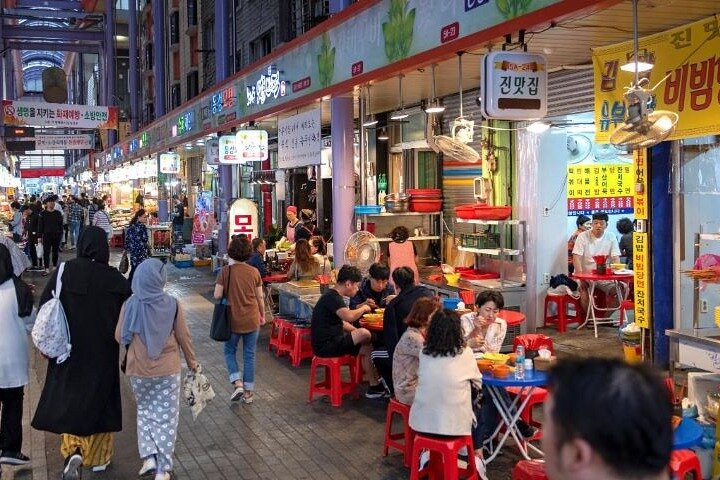
Gukje market is originally formed by Korean War refugees, this downtown market has grown into Busan's largest. Here you can find the best wholesale prices for clothing, silk, linen, curtains, bags, glasses, and many imported items. Similar to Namdaemun Market in Seoul, the stores are small and the vendor-filled alleys are narrow. Kukje Market spills out into the streets and continues into Kwangbok-dong & Namp'o-dong. Along its southern boundary is the Jagalchi Fish Market
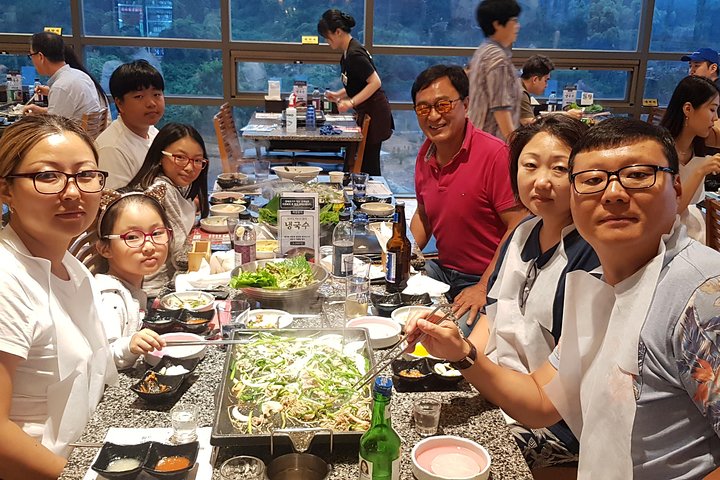
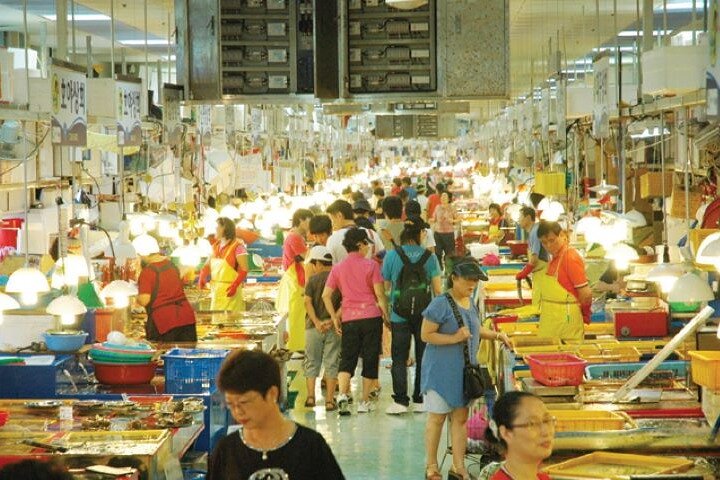
Jacalchi fish market is represented by Busan and is famous throughout the country. Visitors can eat fresh raw fish right at the market. Even nowadays visitors can see women selling mackerel, sea squirts (ascidians), and other seafood on wooden boxes along the road outside of the market and along the shore.
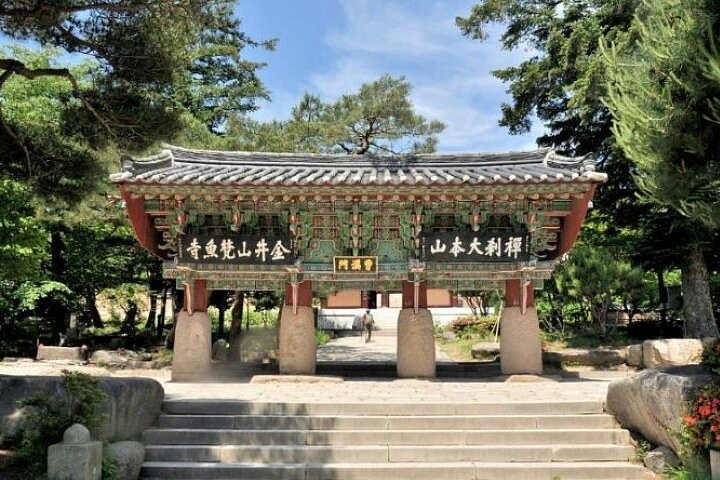
Beomeosa Temple is located on the eastern side of Geumjeongsan Mountain, a famous mountain in Busan. It was founded by monk Uisang in 678, the 18th year of King Munmu (r. 661-681) of the Silla Kingdom. It is one of the three most famous temples in the Yeongnam region, along with Haeinsa Temple and Tongdosa Temple. Most of the original Beomeosa Temple site was lost during the Imjin War (1592-1598) but was restored in 1613 and has remained until now. Daeungjeon Hall is considered one of the most delicate and luxurious architectures of the Joseon dynasty. Other important sites of the temple include Iljumun Gate, a three-story pagoda with four pillars built in the 9th century; pavilions, gates, and eleven hermitages. Beomeosa Temple also operates a templestay program for visitors to learn more about the Buddhist culture and discover oneself.
Available Languages
Provided by: Frank Yi
Location
37-30, Yongdusan-gil, Jung-gu, Busan, South Korea
Nearby Recommendations
Discover more places near this location


![HOTEL CONT[Korea Quality]/ 호텔콘트(HOTEL CONT)[한국관광 품질인증]](https://images.whatmytrip.com/images/2652067/main.webp)

![Hound Hotel Premier Nampo [Korea Quality] (하운드호텔 프리미어 남포 [한국관광 품질인증])](https://images.whatmytrip.com/images/2652251/main.webp)
![New Era - Gwangbok Branch [Tax Refund Shop] (뉴에라 광복점)](https://images.whatmytrip.com/images/2958200/main.webp)
![CheongKwanJang - Busan Station Branch [Tax Refund Shop] (정관장 부산역)](https://images.whatmytrip.com/images/2959855/main.webp)


